If you’re dealing with a burst pipe or a flooded basement, cost is usually the first question that comes to mind right after the panic sets in. Water damage restoration pricing depends on a handful of factors – how much water, what kind, how long it sat, and how large the affected area is. Here’s a realistic breakdown of what homeowners in Toledo can expect to pay, and how to avoid overspending along the way.
What Affects the Price of Water Damage Restoration
Restoration pricing generally comes down to three things: the water category, the size of the affected area, and how quickly the job gets started.
Water category matters most. Clean water from a supply line or appliance is the least expensive to handle, typically $2,500-$4,500 for a standard job. Gray water – from washing machines or dishwashers – runs closer to $4,000-$6,000 because it carries more contamination risk. Black water, from sewage backups or major flooding, usually starts around $7,000 and climbs from there due to the health precautions and specialized cleanup required.
Size of the affected area is the other major driver. Most restoration companies price by square footage, generally in the $3.75-$7 per square foot range. A small bathroom leak might land in the $1,500–$3,000 range, while a flooded basement can run $5,000 or more once flooring, drywall, and structural drying are factored in – basements in lower-lying areas like Glendale-Heatherdowns tend to see this on the higher end.
Timing changes the math too. Water that sits for more than 24-48 hours starts creating secondary problems – swelling wood, mold growth, weakened drywall – which can add mold remediation costs on top of the original job. Acting fast is usually the cheapest option, even though it doesn’t feel that way in the moment.
Why Toledo Homes Can See Higher Costs
A few local factors tend to push restoration costs up in Toledo specifically. Older housing stock – especially in neighborhoods with homes built in the early-to-mid 1900s – often has outdated plumbing and less effective vapor barriers, which means water spreads further before it’s caught. Freeze-thaw cycles in winter are a common cause of burst pipes, and heavy spring rain near low-lying areas can lead to basement and flood-related water damage that requires more extensive drying and structural work.
Permits for major repairs are also a factor. Ohio building codes require permits for significant structural or electrical work, which can add a few hundred dollars to the total but is not optional if the damage is serious enough to require it. Homes with finished basements or older wiring – common in neighborhoods like East Toledo – tend to see this cost more often than homes with simpler, newer layouts.
The Restoration Process – and Where the Cost Comes From
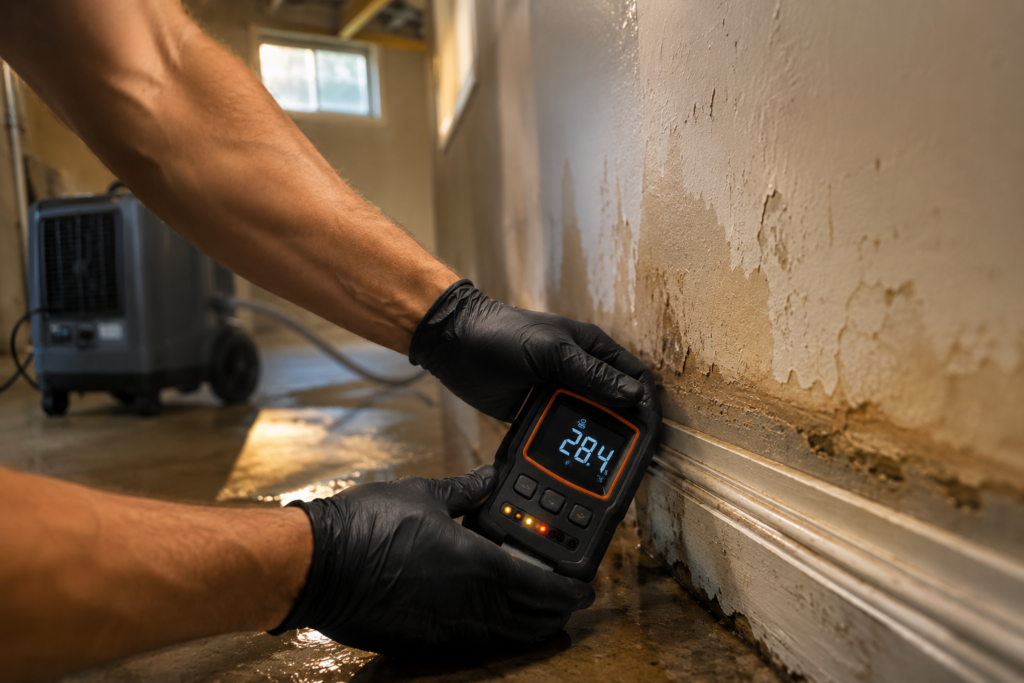
It helps to understand what you’re actually paying for. A typical job involves four phases: assessment, extraction, drying, and repair. The assessment identifies how far water has traveled, including into areas that aren’t visibly wet. Extraction removes standing water using pumps and truck-mounted equipment for larger jobs. Structural drying and dehumidification is usually the longest phase – it can take three to five days to bring moisture levels in wood, drywall, and subfloor back to a safe range, and cutting this phase short is one of the most common reasons restoration costs end up higher in the long run, since incomplete drying leads to repeat visits.
Repair is the final phase and the most variable in cost. It can be as simple as replacing baseboards and repainting, or as involved as a full structural restoration if flooring, framing, or drywall needs to be rebuilt.
How to Keep Costs Down
- Shut off the water source immediately and avoid using electrical outlets in wet areas until it’s safe.
- Document everything – photos, videos, and notes – before cleanup starts. This is what your insurance adjuster will need.
- Start extraction within 24-48 hours. The longer water sits, the more likely it is that mold and structural damage set in, which raises the final bill.
- Get more than one quote, and ask what’s included – extraction, drying, repairs, and any permit fees should be itemized, not bundled into a vague total.
- Check your policy before assuming coverage. Standard homeowners insurance often covers sudden water damage (like a burst pipe) but excludes flood damage from external sources like the Maumee River – that typically requires separate flood insurance.
If you’re unsure how the claims process works or what your policy actually covers, our guide on filing a water damage insurance claim in Toledo walks through what documentation insurers expect and how to avoid common reasons claims get delayed or denied.
Common Mistakes That Drive Costs Up
The most expensive mistake homeowners make is waiting. Water sitting for even a day or two can lead to mold growth, which turns a simple drying job into a much larger remediation project. Surface drying is another common trap — a floor can look dry within a few hours while moisture is still trapped in the subfloor or wall cavities, leading to problems (and costs) resurfacing weeks later.
Skipping documentation is the other big one. Without photos and a clear timeline, insurers are more likely to dispute or deny a claim, leaving the homeowner to cover costs that should have been reimbursed. And choosing a contractor based purely on the lowest quote can backfire — incomplete extraction or drying often means a second job (and a second bill) a few weeks later, something homeowners near flood-prone stretches like Maumee run into more than most.
Getting an Accurate Quote
Because every water damage situation is different, the most reliable way to know your actual cost is a water damage inspection – this identifies the water category, how far it’s spread, and what’s needed to dry the property properly before any repair estimate is finalized.
If you’re dealing with water damage in Toledo, OH and want a clear, itemized estimate before any work starts, contact us or call (419) 965-0114.
Leave a Reply