Filing a water damage insurance claim sounds straightforward until you’re actually standing in a wet basement at 10 PM, trying to remember what your policy covers and whether you’re supposed to call your insurance company before or after you call a restoration crew. Most Toledo homeowners have never done this before, and the process has more moving parts than it looks like on paper.
This guide walks you through exactly what to do – in order – so your claim gets processed properly and you don’t end up with less coverage than you’re entitled to.
First, Understand What Your Policy Actually Covers
Before anything else, it helps to know the difference between what standard homeowners insurance covers and what it doesn’t – because they’re not the same thing.
Most Ohio homeowners policies cover sudden and accidental water damage. This means a burst pipe, an appliance that failed unexpectedly, or water that came in through a roof damaged by a storm. It does not typically cover flooding from outside – meaning if the Maumee River overflows and water enters your Toledo home, that falls under flood insurance, which is a separate policy through the National Flood Insurance Program.
It also generally won’t cover damage caused by long-term neglect – a slow leak you knew about for months, for example, or a sump pump that hadn’t been serviced in years.
If you’re unsure what your specific policy covers, call your agent before assuming either way. Many Toledo homeowners find out too late that they had less coverage than they expected – or more.
Step 1 – Stop the Water Source First
Before you document anything or call anyone, stop the water if you can. Shut off the main water supply if it’s a pipe issue. Move valuables out of standing water. If there’s any risk of electrical hazard – water near outlets, a flooded utility room – don’t enter until it’s safe.
Insurance companies expect you to take reasonable steps to prevent further damage. If you let water keep spreading after you had a way to stop it, that portion of additional damage may not be covered.
Step 2 – Document Everything Before Cleanup Begins
This is the step most people skip because they’re focused on getting the water out – and it costs them later.
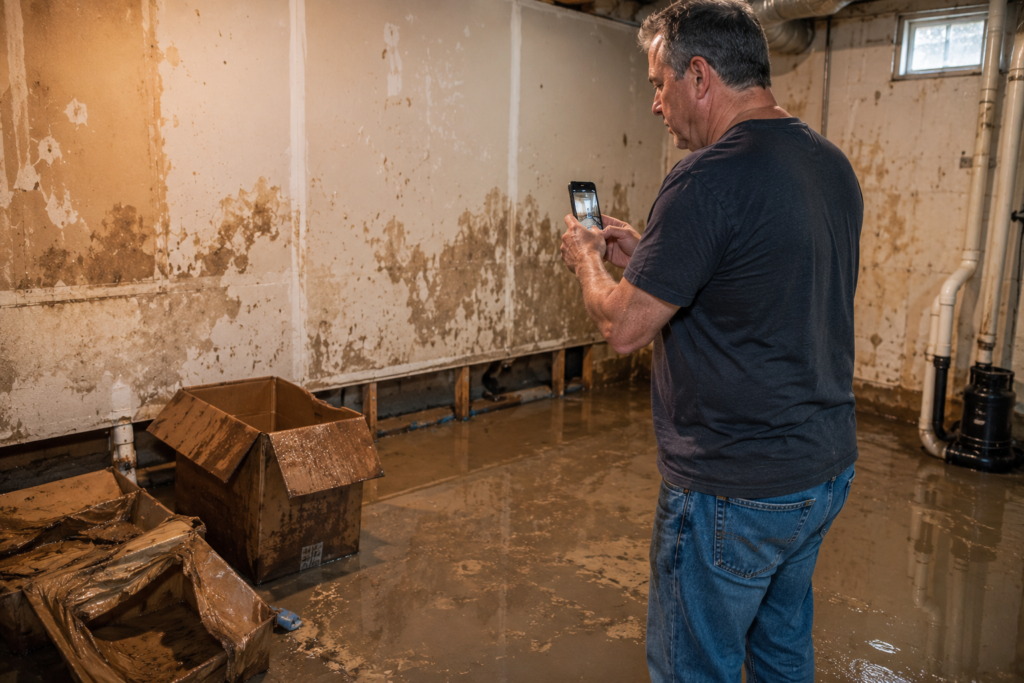
Take photos and video of every affected area before anything is moved or dried. Capture the water level, damaged walls, flooring, furniture, appliances, and any personal belongings. If you can safely show where the water came from – the burst pipe, the failed water heater, the roof opening – photograph that too.
Save everything digitally with timestamps. These images become your evidence when the adjuster reviews your claim, and the more thorough you are here, the smoother the rest of the process goes.
Step 3 – Call Your Insurance Company
Contact your insurer as soon as possible – most policies require you to report damage promptly, and waiting too long can create complications. When you call:
- Tell them what happened, when it happened, and what areas of the home are affected
- Ask specifically what your policy covers for this type of damage
- Get a claim number and the name of the adjuster assigned to your case
- Ask about timelines – when will someone come out, and what’s the expected processing time
Write all of this down. You’ll refer back to it.
Step 4 – Call a Restoration Company
Here’s something a lot of Toledo homeowners don’t realize – you don’t have to wait for your adjuster to show up before starting restoration work. In fact, waiting can make things significantly worse. Mold can begin developing within 48 hours of water exposure, and insurers expect you to mitigate damage, not let it grow.
A professional water damage restoration company will document everything on their end as well – moisture readings, affected square footage, equipment used, drying logs. This documentation is exactly what your insurance adjuster needs, and a good restoration team will work directly with your insurer to make the process easier.
If you’re in Toledo and need someone on-site quickly, Toledo Water Damage responds around the clock and handles insurance documentation as part of every job.
Step 5 – Meet With the Insurance Adjuster
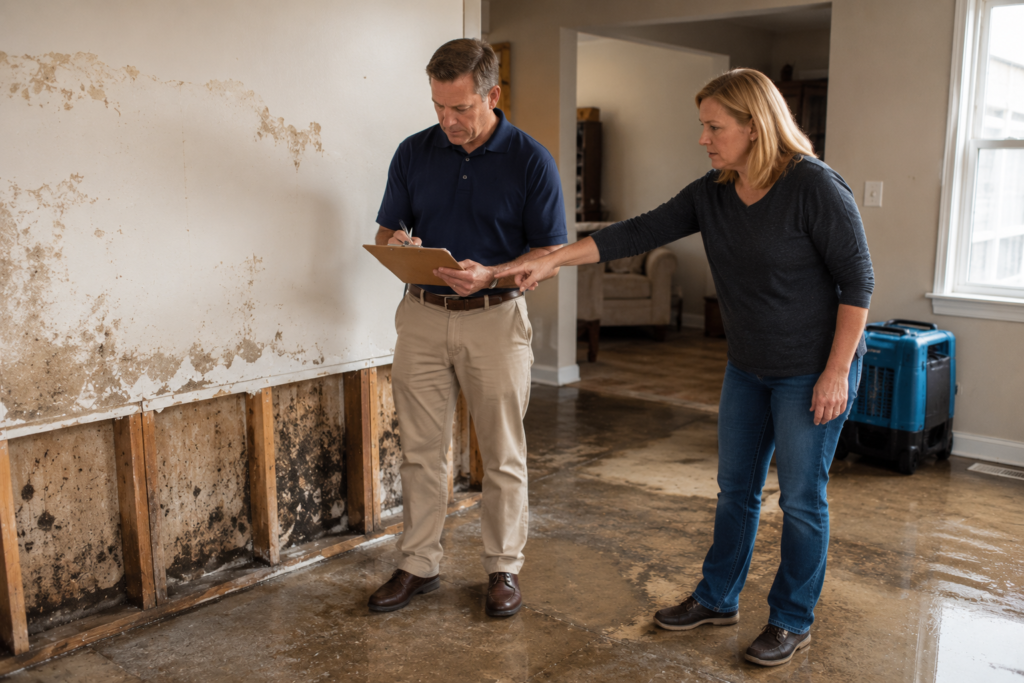
Your insurance company will send an adjuster to assess the damage in person. A few things to keep in mind for this visit:
Be present if you can. Walk them through every affected area yourself rather than letting them assess it alone. Point out damage that might not be immediately obvious – moisture inside walls, affected subflooring, items in storage that got wet.
Have your documentation ready – your photos, the restoration company’s reports, any receipts for damaged belongings. The adjuster’s job is to assess what’s covered under your policy, and the more evidence you have, the more complete their assessment can be.
If you feel the adjuster has missed something significant, you have the right to request a re-inspection or bring in a public adjuster – an independent professional who works on your behalf rather than the insurance company’s.
Step 6 – Review the Settlement Offer Carefully
Once the adjuster files their report, your insurer will send a settlement offer. Read it carefully before accepting.
Check that all affected areas are included. Verify that the repair costs reflect actual contractor rates in Toledo — not national averages that may be lower. If personal belongings were damaged, confirm they’re accounted for at fair replacement value.
If something seems off or you believe the offer is too low, you can negotiate. Get written estimates from local contractors to support your position. Ohio homeowners have the right to dispute a claim decision – your policy will outline the process, and the Ohio Department of Insurance is a useful resource if you need to understand your rights.
Step 7 – Keep All Records Until the Claim Is Fully Closed
Don’t delete anything until every check has cleared and all repairs are complete. Keep records of every conversation with your insurer – dates, names, what was discussed. Save all contractor invoices, receipts for temporary repairs, and any out-of-pocket costs. Some policies reimburse additional living expenses if you had to stay elsewhere during restoration, and you’ll need receipts for that too.
Frequently Asked Questions
Will filing a claim raise my insurance premiums in Ohio? It can, depending on your insurer and your claims history. One claim doesn’t automatically trigger a rate increase, but multiple claims in a short period often do. Talk to your agent about what to expect before filing if the damage is relatively minor.
How long does a water damage claim take in Toledo? It varies. Simple claims can close in a few weeks. Complex ones involving significant structural damage or disputes can take several months. Staying organized and responsive to your adjuster’s requests is the best way to keep things moving.
What if my claim gets denied? First, ask for the denial in writing and a clear explanation of why. Many denials come down to policy language around cause of damage – for example, “gradual damage” vs. “sudden damage.” If you believe the denial is incorrect, you can appeal internally or contact the Ohio Department of Insurance for guidance.
Do I need a public adjuster? Not always. For straightforward claims, most homeowners handle it fine on their own. For large losses, disputed claims, or situations where you feel the insurance company isn’t being fair, a public adjuster can be worth the cost – they typically work on a percentage of the final settlement.
One Last Thing
The biggest mistake Toledo homeowners make with water damage claims is waiting – waiting to document, waiting to call, waiting to start cleanup. Every hour matters when water is sitting in your home, and a delayed claim is a harder claim.
If your home has taken on water and you’re not sure where to start, call a restoration team first. They’ll help stabilize the situation and make sure the documentation is in place before your adjuster ever shows up.
Leave a Reply