Most homeowners use “water damage” and “flood damage” interchangeably. Insurance companies don’t. The distinction between the two isn’t just technical language – it’s often the difference between a claim that gets paid and one that gets denied. If you’re dealing with water in your Toledo home right now, understanding which category you’re in matters more than almost anything else you’ll do this week.
What Counts as “Water Damage”?
Water damage refers to sudden, internal water events – the kind that happen inside a home and aren’t caused by rising water from an external source. This includes burst pipes, a washing machine that overflows, a water heater that fails, or a roof leak during a storm. Standard homeowners insurance policies generally cover this type of damage, as long as it’s sudden and accidental rather than the result of long-term neglect, like a slow leak that was never fixed.
The key word insurers look for is sudden. A pipe that bursts overnight is covered. A pipe that’s been dripping slowly for six months, causing gradual rot, often isn’t – because insurers consider that a maintenance issue the homeowner should have caught.
What Counts as “Flood Damage”?
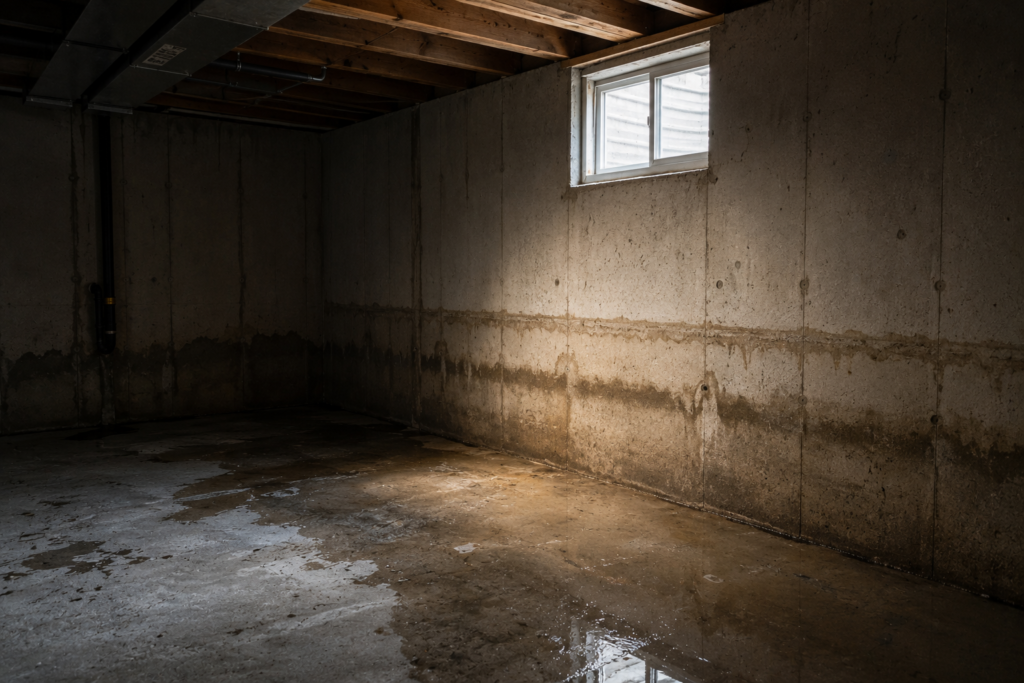
Flood damage, by contrast, refers to water that enters a property from an external source – rising rivers, overwhelmed storm drains, or heavy rain that pools and enters at ground level from outside. In Toledo, this typically means water from the Maumee River overflowing its banks, or storm runoff that backs up faster than city drainage can handle it, especially in low-lying neighborhoods.
Here’s the part that surprises a lot of homeowners: standard homeowners insurance does not cover flood damage. It’s excluded by default in almost every policy. Flood coverage has to be purchased separately, typically through the National Flood Insurance Program (NFIP) or a private flood policy. If your basement fills with river water during a spring storm and you don’t have separate flood coverage, that damage is very likely coming out of pocket.
Why the Line Between the Two Gets Blurry
In practice, a single storm can cause both types of damage in the same house. Rain might get in through a damaged roof (water damage – covered) while the same storm also causes river water to seep into the basement through the foundation (flood damage – not covered without separate insurance). This is exactly why documentation and a proper inspection matter so much. A water damage inspection can help identify the source and entry point of the water, which is often the deciding factor in how an insurance adjuster classifies the claim.
Sewer backups are their own gray area. Water that backs up through drains during heavy rain is sometimes covered under a water damage policy, sometimes treated as flood-related, and sometimes requires a specific sewer backup rider – it depends entirely on your policy’s wording, so this is worth a direct call to your insurer rather than an assumption either way.
What This Means for Toledo Homeowners
Toledo sits close enough to the Maumee River and Lake Erie that flood risk isn’t hypothetical, particularly in neighborhoods on lower ground. If you’ve never checked whether your policy includes flood coverage, it’s worth a five-minute call to your agent before you ever need it – after water is already in your basement is the worst time to find out you’re not covered.
For water damage claims specifically, the process tends to go smoother when you can show the source was sudden and accidental. Photograph the damage before touching anything, note the date and suspected cause, and avoid describing it to your insurer in vague terms like “it’s been damp for a while,” which can trigger the gradual-damage exclusion even if that’s not really what happened. Our guide on filing a water damage insurance claim in Toledo covers this process in more detail.
What to Do Regardless of the Cause
Whether it’s classified as water damage or flood damage, the immediate response is the same: get the water out and the space dried as fast as possible. Mold doesn’t check your insurance policy before it starts growing – it can begin within 24 to 48 hours regardless of whether the water came from a pipe or the river. If drying gets delayed while a claim is sorted out, mold remediation often becomes a second, separate cost on top of the original damage.
Homes in flood-prone stretches near Glendale-Heatherdowns or along low-lying parts of the city tend to see this combination – flood-related water intrusion followed by a mold problem if the basement isn’t dried quickly – more often than homes on higher ground.
Bottom Line
If water got into your home from something that broke or failed inside the house, it’s probably water damage and likely covered. If it came from rising water outside – a river, storm drain, or general flooding – it’s flood damage, and you’ll need separate flood insurance for it to be covered. When you’re not sure which one you’re dealing with, an inspection before cleanup starts is the safest way to protect both your home and your claim.
If you’re dealing with water damage or flooding in Toledo, OH right now, call us at (419) 965-0114 for a fast response, 24/7.
Leave a Reply