Toledo’s basements deal with a lot: heavy spring rain, snowmelt runoff, and a sewer system that can back up during intense storms. Most flooding isn’t random bad luck – it’s the result of one or two specific weak points that, once fixed, dramatically lower your risk. Here’s where to focus, and what to genuinely watch out for.
Where the water actually comes from
Before fixing anything, it helps to know which of these is most likely your situation:
Groundwater and surface runoff. After heavy rain, soil around your foundation becomes saturated. If your yard doesn’t slope away from the house, that water pools against the foundation instead of running off, and eventually finds its way through cracks or gaps.
Sewer backups. Toledo’s older neighborhoods are served by a combined sewer system, which means stormwater and sewage share the same pipes during heavy rain. When that system is overwhelmed, water can be forced backward up through floor drains – this is a different (and more serious) problem than groundwater seepage, since it brings contamination with it.
Plumbing failures. Frozen pipes in winter, or simply aging supply lines, are a year-round risk independent of weather.
Sump pump failure. If your home already relies on a sump pump and it fails – from a power outage, a stuck float switch, or just age – water that the system is designed to handle has nowhere to go.
What actually helps, and why
Fix your grading first. This is the most overlooked, highest-impact fix. Ground should slope away from your foundation; if water visibly pools near your house after rain, that’s worth correcting before anything else. Extending downspouts so they discharge well away from the foundation (not just off the roof edge) is a simple, low-cost version of the same fix.
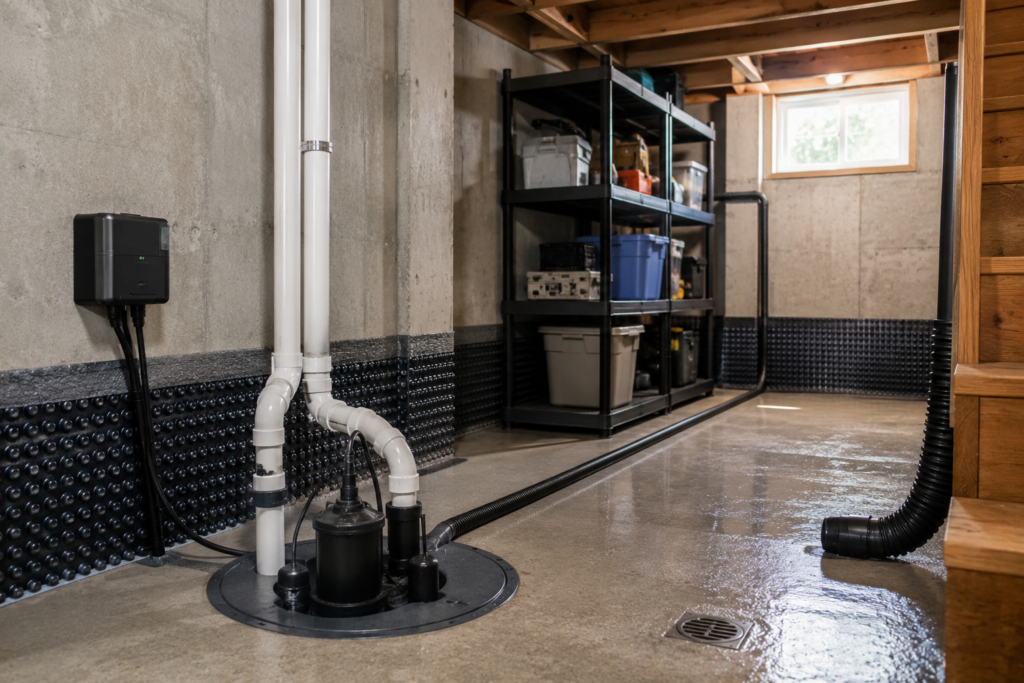
Test your sump pump regularly, not just when it rains. Pour a bucket of water into the pit and confirm it activates and drains. A battery backup is worth the cost if your area loses power during storms – a sump pump that can’t run during an outage is exactly when you need it most. If you don’t currently have one and your basement floods periodically, this is usually the single best investment you can make.
Seal visible cracks before they become entry points. Hydraulic cement on foundation cracks and proper sealing around window wells stops a lot of minor seepage before it starts. This isn’t a fix for serious structural issues, but it handles the small gaps that let water in during heavy rain.
Install a backwater valve if sewer backups are a risk in your area. This is a more involved fix – usually requiring a permit through Lucas County – but it’s the one real solution to sewage backing up through floor drains during a municipal system overload. If you’ve had a backup before, this is worth a real conversation with a plumber, not just a one-time cleanup.
Keep gutters clear, especially before fall and spring rain. This sounds basic, but clogged gutters that overflow at the foundation line are one of the most common, entirely preventable causes of basement water we see. It’s a 30-minute job that prevents a multi-day one.
Mistakes that make this worse
Testing the sump pump only after it’s already raining. By the time you find out it’s not working, water is already coming in. Monthly testing, especially heading into spring and after winter freezes, is the only way to catch a failure before it matters.
Treating cracks as cosmetic. A small crack that’s “just a little damp” is often the early sign of a bigger pressure problem building behind the wall. It’s worth having someone look at it rather than assuming it’ll stay small.
Skipping a real inspection after the first sign of water. A damp spot or musty smell that gets wiped up and ignored tends to come back, usually worse – especially in Toledo’s humidity, where mold can take hold within days of a basement staying damp.
Not knowing whether your home is on a combined sewer system. This matters because it determines whether a backwater valve is a reasonable precaution or a genuine necessity. If you’re not sure, it’s worth checking with the city or asking a plumber directly.
If your basement has already flooded
Prevention is the long game, but if you’re dealing with water in your basement right now, speed matters more than anything else – our 24/7 water damage response guide covers what to do in the first hour. And if the flooding involved any backup from sewer lines rather than just clean rainwater, that’s a crawlspace and water damage cleanup situation that needs different handling than a simple rainwater seep, since contamination changes what’s safe to clean yourself versus what needs professional extraction.
Filing an insurance claim afterward also goes more smoothly with documentation done right – our insurance claim guide walks through what adjusters typically want to see.
The bottom line
Most basement flooding comes down to a handful of fixable weak points – grading, sump pump reliability, sealed cracks, and clear gutters. None of these are expensive or complicated individually, but skipping all of them is how a heavy rain turns into a real problem. If you’re not sure where your home stands, an inspection is a lot cheaper than a flood.
Call Toledo Water Damage at (419) 965-0114 for an inspection, or for immediate help if water’s already in your basement.
Leave a Reply